Electric Vehicle Charging in Germany for English Drivers.
28 June, 2025· Article by David Brown


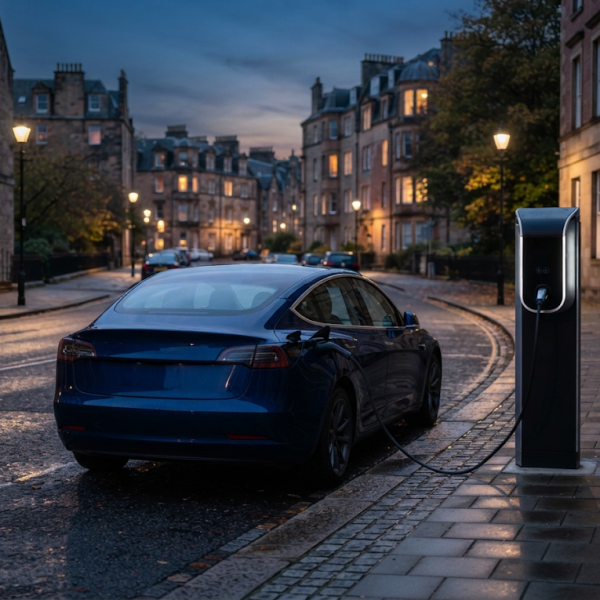
A British family drives a rented electric car off the ferry in Kiel and discovers that driving in Germany is a lesson in charging. There are thousands of public charge points, run by dozens of providers, each with its own app, card, tariff and plug rules. The charger is free but the screen is in German, the pricing is by kilowatt hour or by minute, and a blocking fee applies after four hours. An electric driver in a foreign country needs more information than a petrol driver, and the information must be exact, because a mistake means a flat battery on the Autobahn. This guide explains how charging companies, car rental firms and hotels can prepare English guides and contracts for international drivers.
What Drivers Need to Know
Drivers ask where to charge, how fast, at what price, with which plug and with which payment method. They also ask how to start a session, what to do if the charger fails, whether roaming works with their home app and how to get an invoice. Provide each answer in plain English, in the same order, so that a driver can find it quickly in a stressful moment.
Plugs, Power and Units
Explain the common connector types, power levels and charging times in simple words. Use kilowatts and kilowatt hours consistently, and show estimated range in kilometres and miles. Explain the difference between slow, fast and ultra-fast charging, and mention that actual speeds depend on the car and the temperature. The German energy association at bdew.de publishes data on charging infrastructure that can help ensure your facts are correct.
Apps, Cards and Payment
Many drivers need to register for an app before they can charge, and the registration may require a German phone number or address. Explain the options clearly: roaming cards, payment by credit card at the charger, QR codes and subscription plans. Show the price before the session, and say whether additional fees apply, such as a connection fee, an idle fee or a roaming surcharge. Hidden costs are the fastest way to lose a customer.
Contracts and Terms of Use
Charging contracts and terms of service set out prices, liabilities, data use and cancellation. For companies that serve international customers, accurate English versions are not optional. A provider of german to english translation services can prepare consistent versions of terms, tariffs, privacy notices and app texts, while a lawyer confirms that the legal effect is the same. Keep the German version as the reference, and say so clearly.
Error Messages and Support
The worst moment is a failed session at night. Error messages should say what happened and what to do next: check the plug, try another connector, call support. Provide a support number with English-speaking staff and opening hours. Document the most common errors in a short troubleshooting page with photos, so that drivers can solve problems without calling anyone. For another example of how clear language helps users, see this article on German to English translation.
Rental Cars and Fleet Operators
Rental companies should include a short English guide in the glove compartment: how to open the charge flap, which cards are included, how to start a session, what to do if the car will not charge and how to return it with the right battery level. Explain the rules about charging costs, penalties and breakdown assistance. A guest who feels supported will rent again, and a guest who gets stranded will not.
Hotels, Restaurants and Destinations
Hotels and attractions that offer chargers should say so on their English pages, with the number of points, the power, the price and whether guests need to book. Add directions and photos showing where the charger is and how to park. Staff should know a few phrases for explaining how the charger works and for helping guests who cannot start a session.
Safety and Etiquette
Explain simple rules: do not unplug another car, move the car when the charge is complete, keep cables tidy, use the correct plug and report damage. Give safety advice on wet weather, damaged cables and the use of adapters. Rules should be short and clear, and signs at the charger should use pictograms as well as words.
Data, Privacy and Roaming
Apps collect location, payment and vehicle data. Explain what is collected, why and for how long, and how users can see or delete their data. European data protection rules apply to many of these services, so privacy notices should be reviewed by a lawyer and available in English. A transparent notice builds trust with drivers who are guests in a foreign system.
Planning a Journey
Provide a sample route from a port or airport with suggested charging stops, travel times and nearby cafes. Explain that planning apps may differ in estimates. Encourage drivers to start charging early in the day and avoid arriving with an empty battery. Practical examples make an unfamiliar network feel manageable.
A Network That Speaks to Visitors
Maintain a glossary of charging terms, a style guide for app texts and a template for support replies. Review them whenever tariffs or features change. A charging network that is easy to understand in English invites visitors to travel further, and the best infrastructure is the one a stranger can use at the first attempt.
Recent Posts

Certified Arabic to English Tr...

Certified Diploma Translation ...

Traduire une recette italienne...

Translation Memory Explained a...

Translating Product Catalogues...

Common Pitfalls in Translating...
Share it.

Links
We use cookies
We use cookies to give you the best online experience, remember your preferences, and understand how the site is used. You can accept all cookies, reject optional ones, or choose which categories to allow.
Privacy PolicyCookie preferences
Choose which cookies we can use. Necessary cookies stay on because the site cannot work without them.
For more details, read our Privacy Policy.